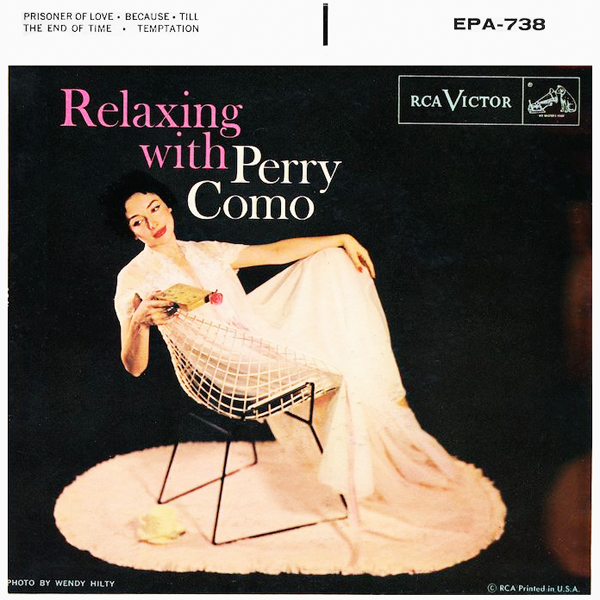
 Album Notes
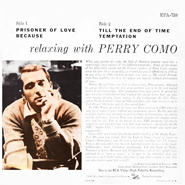
When you consider its scope, the field of American popular music has a surprisingly large number of very different interpreters. Amid all the trends of the times there stands out the honeyed baritone of Perry Como singing away hit after hit as eloquently, as beautifully and as effectively in 1956 as he was doing in 1946, indeed, perhaps even more so. His secret? Perhaps more than anything else it is his unique and typical, relaxed presentation of songs. Pierino Ronald Como was born in Canonsburg, Pennsylvania. Although he always like to sing, his first real ambition was to be the best darned barber in all Canonsburg. After graduation from high school, he opened his own tonsorial establishment that featured the special Como haircuts plus some mighty pleasing Como singing in the background. In 1933 Perry joined Freddy Carlone's band in Ohio and three years later moved on up to Ted Weems' Orchestra and his first record dates. In 1942 Weems dissolved his band and Perry went on to CBS where he sung for a couple of years without any conspicuous success. By this time the erstwhile barber had definitely decided to return to Canonsburg, his family and his barbering. Just as Perry was about to abandon his singing career once and for all, Fate in the person of two NBC producers felicitously and wheeled him back into show business — specifically for the NBC "Supper Club," followed by very successful theater and night club engagements. Come 1945 and Como's practically perfect reading of the Buddy Kaye-Ted Mossman pop ballad 'Till the End of Time (based of course on Chopin's Polonaise), and the rest is not only recording but TV history; Perry is the only artist who has ever had ten records to go over the million-copies mark (including, incidentally, 'Till the End of Time, Prisoner of Love, Because and Temptation — all in this album) and, although he is "just a singer," as he puts it, his television show has achieved a much higher rating than that of any other vocalist so far. Can any other barber equal that record?! © by Radio Corporation of America, 1956 Cover photo: Bertoia Chair, courtesy Knoll Associates This is an RCA Victor High Fidelity Recording |
| 1940s | Early 50s | Late 50s | Early 60s | Late 60s | Early 70s | Late 70s | 1980s |


